

The ethical hacker role – In a world where cyberattacks are growing in frequency and sophistication, organizations can no longer afford to wait for a breach to discover their weaknesses. This is exactly where ethical hackers step in. Often called “white hat hackers,” they use the same tools and techniques as malicious attackers – but with full authorization and one clear goal: find the vulnerabilities before the criminals do. Understanding the ethical hacker role is key to understanding how modern organizations stay protected.
Who Is an Ethical Hacker?
An ethical hacker is a cybersecurity professional hired by an organization to legally attempt to breach its systems, networks, and applications. Unlike malicious hackers, they operate under a defined scope and with explicit permission. Their findings are documented and handed back to the organization so vulnerabilities can be patched before real attackers find them.
The ethical hacker role is formally recognized through certifications such as CEH (Certified Ethical Hacker) and OSCP (Offensive Security Certified Professional), which validate both technical knowledge and ethical standards.
Key Responsibilities of an Ethical Hacker For more information visit this page.
Penetration Testing
The most well-known part of the ethical hacker role is penetration testing – simulating real-world attacks on systems, applications, and networks to identify exploitable weaknesses. These tests mirror the exact methods a black hat hacker would use, giving organizations an honest picture of their security posture.
Vulnerability Assessment
Ethical hackers systematically scan and analyze systems to identify known vulnerabilities – outdated software, misconfigured servers, weak passwords, and unpatched flaws. Unlike a full penetration test, a vulnerability assessment focuses on discovery rather than active exploitation.
Social Engineering Testing
Many breaches begin not with a technical exploit but with a manipulated employee. Ethical hackers simulate phishing emails, fake phone calls, and impersonation attempts to test how well staff recognize and respond to social engineering attacks – often the weakest link in any security chain.
Security Auditing and Reporting
After testing, ethical hackers compile detailed reports outlining every vulnerability discovered, how it was exploited, and the recommended fix. These reports are critical for security teams and leadership to prioritize and address risks in a structured way.
Red Team Operations
In advanced engagements, ethical hackers operate as a “red team” – a dedicated group that launches sustained, multi-stage simulated attacks against an organization over weeks or months. This tests not just technical defenses but also the detection and response capabilities of internal security teams.
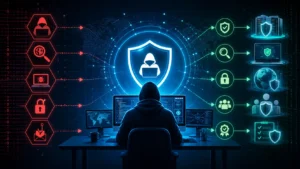
Why the Ethical Hacker Role Matters
Finding Flaws Before Attackers Do
Every system has vulnerabilities. The only question is who finds them first. Ethical hackers give organizations the opportunity to discover and fix weaknesses on their own terms – before a malicious actor exploits them for financial gain, data theft, or reputational damage.
Strengthening Security Culture
Beyond technical fixes, ethical hacking exercises raise awareness across an entire organization. When employees experience a simulated phishing attack or see the results of a penetration test, security becomes real and tangible – not just an abstract IT concern.
Meeting Compliance Requirements
Regulatory frameworks such as ISO 27001, PCI-DSS, and HIPAA often require regular security testing as part of compliance. Ethical hackers help organizations meet these legal and industry obligations while genuinely improving their security posture – not just ticking a checkbox.
Conclusion
As cyber threats continue to evolve, the ethical hacker role has become one of the most valuable in the entire field of cybersecurity. They are the professionals who think like attackers, act with integrity, and give organizations the honest, ground-level assessment they need to build real defenses. In a landscape where the question is not if you will be targeted but when, having an ethical hacker on your side is not a luxury – it is a necessity. For more guidance view this page