

Introduction to Cyber Security Skill Gap
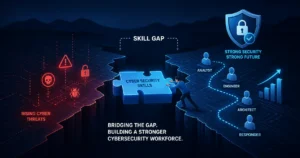
As the digital world continues to expand, cyber threats are becoming more advanced and more frequent. Organizations across every industry are investing heavily in their cybersecurity defenses. However, there is a critical problem holding them back. The professionals available in the market often do not have the specific skills that employers actually need. This difference between the skills organizations require and the skills workers currently possess is known as the cyber security skill gap.
The cyber security skill gap is one of the most serious challenges facing the technology industry today. It is not just about having too few cybersecurity professionals. It is about those professionals lacking the right mix of practical, up-to-date skills needed to deal with modern threats. Understanding this gap, why it exists, and how to close it is essential for both employers and individuals building a career in cybersecurity.
What Is the Cyber Security Skill Gap
The cyber security skill gap refers to the mismatch between what employers need from their security teams and what the available workforce can actually deliver. Many organizations report that even when they do hire cybersecurity professionals, those professionals struggle to handle advanced threats, use modern tools effectively, or adapt quickly to new attack methods.
This gap exists at multiple levels. Some professionals have strong theoretical knowledge but lack hands-on experience. Others are experienced in older technologies but have not kept up with newer areas like cloud security, AI-driven threats, or zero-trust architecture. The result is that organizations remain vulnerable even when they have security staff on payroll.
Main Causes of the Cyber Security Skill Gap
Several key factors are responsible for creating and widening the cyber security skill gap. Each of these causes needs to be understood in order to find effective solutions.
Outdated Education and Training Programs
Many universities and colleges still teach cybersecurity using outdated curriculums that do not reflect the current threat landscape. By the time a student completes a degree, some of the tools and techniques they studied may already be obsolete. The speed at which cybersecurity evolves makes it very difficult for traditional education systems to stay relevant. This leaves graduates entering the workforce without the practical skills that employers are looking for.
Lack of Hands-On Experience
Cybersecurity is a highly practical field. Reading about how to perform a penetration test or analyze a network packet is very different from actually doing it. Many training programs focus too heavily on theory and do not give students enough opportunity to practice in realistic environments. Without hands-on experience, professionals struggle to perform effectively when they face real-world threats on the job.
Rapidly Evolving Threat Landscape
Cybercriminals are constantly developing new techniques, tools, and strategies. What was considered a strong defense two years ago may be completely ineffective today. This rapid evolution means that even experienced professionals must continuously update their skills. Those who stop learning quickly fall behind, which widens the skill gap even among seasoned workers already employed in the industry.
Unrealistic Employer Expectations
Another factor contributing to the cyber security skill gap is the way employers write their job descriptions. Many organizations list an overwhelming number of requirements for a single role, expecting candidates to be experts in networking, cloud security, malware analysis, compliance, and scripting all at once. These unrealistic expectations make it harder to fill positions and discourage qualified candidates who may excel in specific areas but not all of them.
How to Close the Cyber Security Skill Gap
Closing the cyber security skill gap requires effort from both individuals and organizations. For individuals, the focus should be on building practical skills through dedicated platforms like TryHackMe, Hack The Box, and Cybrary. These platforms offer real-world labs and challenges that simulate actual attack and defense scenarios. Earning certifications such as CompTIA Security+, CEH, and OSCP also helps demonstrate verified competency to employers.
For organizations, the solution involves investing in continuous training for existing staff, creating mentorship programs, and partnering with educational institutions to shape more relevant curricula. Employers who are willing to hire candidates based on demonstrated skills and certifications rather than just formal degrees will have a much easier time filling their security roles. To learn more visit this website.
Opportunity Within the Cyber Security Skill Gap
For individuals willing to put in the work, the cyber security skill gap is actually a significant opportunity. Because so few professionals have the right combination of practical skills and certifications, those who do are in extremely high demand. Salaries in the cybersecurity field are well above average, remote work opportunities are widely available, and job security is strong. Anyone who commits to building real, up-to-date skills will find doors opening quickly.
Final Thoughts on Cyber Security Skill Gap
The cyber security skill gap is a growing challenge that affects organizations around the world. Outdated training, lack of practical experience, and a rapidly changing threat environment all contribute to the problem. However, this gap also creates enormous opportunity for individuals who are serious about developing their skills.
If you focus on practical learning, stay updated with the latest tools and techniques, and earn recognized certifications, you will stand out in a market that desperately needs qualified professionals. The cyber security skill gap will not close overnight, but for those ready to fill it, the rewards are well worth the effort. Read this page.